Search for a doctor or hospital in your network.


Search for a doctor or hospital in your network.

Get News & Updates Directly To Your Inbox

Since their introduction, standard mammograms, also called screening mammograms, have helped save countless lives. By using X-rays, they create two-dimensional images of the breast to spot tissue that may be cancerous.
Still, over the past decade, there have been advances in mammogram technology. Research shows 3D mammography (breast tomosynthesis) can detect breast cancer more accurately than standard mammograms.
Here’s a deeper dive into the potential benefits and risks of a 3D mammogram.
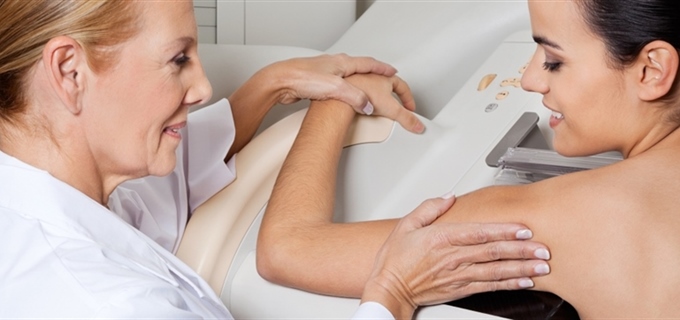
Standard 2D mammograms take two pictures of the breast. Side-to-side and top-to-bottom images are made. To capture them, the breast is pulled away from the body, compressed and held between two glass plates. This allows the whole breast to be seen. One of its drawbacks is breast tissue can overlap during this process. Healthy tissue may appear suspicious and cancerous tissue can be masked. For this reason, 2D mammograms can sometimes produce inaccurate findings.
In contrast, 3D mammograms use CT (computed tomography) scans. The scans take detailed X-ray images from many angles. Combined, the X-rays create a three-dimensional picture of each breast. Tissue doesn’t overlap. As a result, 3D mammograms help doctors spot cancers more easily with fewer false alarms. This is especially important for women who have dense breast tissue. Having fewer false alarms reduces unnecessary stress and worry. It also lowers the need for retesting.
CT-scan technology exposes patients to more radiation than X-rays. Women who get a 3D mammogram may also get a traditional 2D mammogram, exposing them to higher amounts of radiation. While radiation exposure can cause cancer, new technology helps reduce the amount of radiation exposure that comes with a mammogram. Still, the overall benefit of 2D and 3D breast cancer screening outweighs any potential risks linked to radiation exposure.
While research shows 3D mammograms are more effective in detecting tumors, both 2D and 3D mammography are currently recognized as equally acceptable screening methods.
3D mammograms may be covered by your health plan. Before your screening, the provider you choose should be able to give you a breakdown of what you may have to pay if anything. You can also check your coverage by logging into your health plan account online or calling the number on your member ID card.
The U.S. Preventive Services Task Force  recommends that women with average breast cancer risk, between the ages of 40 and 74, get a mammogram at least every two years.
If you have a higher risk of breast cancer, talk to your doctor about screening, no matter your age. Breast cancer risk factors include:
Check with your doctor if you have questions about mammograms or other breast cancer screenings.
National Cancer Institute, 2025; Diagnostic Mammogram, National Breast Cancer Foundation, 2026; 3D Mammography (Digital Breast Tomosynthesis), Breastcancer.org, 2026; 3D Mammograms, Mayo Clinic, 2024; Breast Cancer: Screening U.S. Preventive Services Task Force, 2024; 2D vs 3D Mammograms: Understanding the Difference, American Cancer Society, 2025Blue Cross and Blue Shield of Illinois, a Division of Health Care Service Corporation,
a Mutual Legal Reserve Company, an Independent Licensee of the Blue Cross and Blue Shield Association
© Copyright 2026 Health Care Service Corporation. All Rights Reserved.
Verint is an operating division of Verint Americas, Inc., an independent company that provides and hosts an online community platform for blogging and access to social media for Blue Cross and Blue Shield of Illinois.
 File is in portable document format (PDF). To view this file, you may need to install a PDF reader program. Most PDF readers are a free download. One option is Adobe® Reader® which has a built-in screen reader. Other Adobe accessibility tools and information can be downloaded at https://www.adobe.com/trust/accessibility.html.
You are leaving this website/app ("site"). This new site may be offered by a vendor or an independent third party. The site may also contain non-Medicare related information. Some sites may require you to agree to their terms of use and privacy policy.
| | Powered by Verint